The Pale Blue Eye: A Reflection
Movie Review
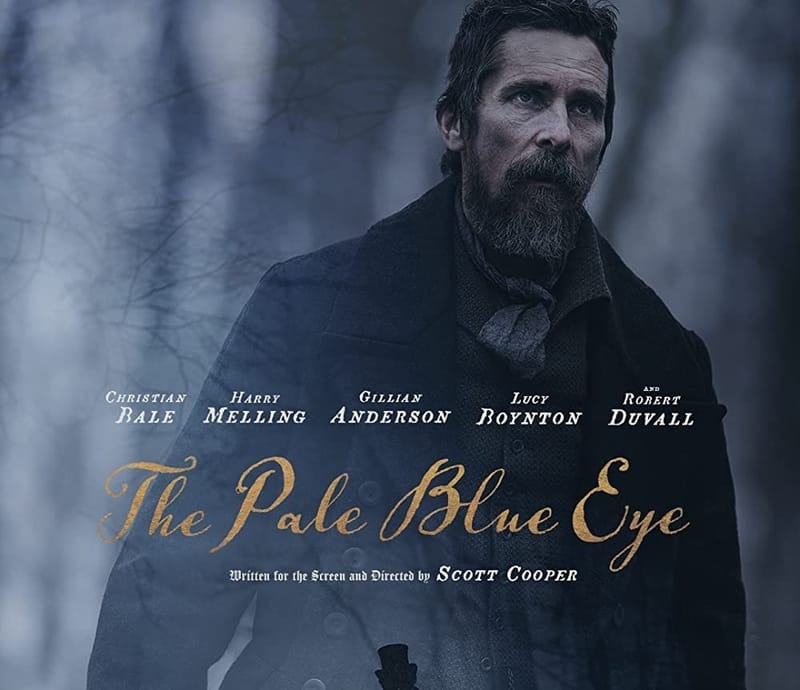
A young cadet named Leroy Fry was found hanging in a rope in the month of October at West Point Academy. It became horrible when his heart was removed. This crime risked the academy’s reputation. It was then investigated by a New York City police detective, Augustus Landor. Landor investigated it to solve the terrible crime inflicted on the academy. He was assisted by an unexpected ally named Edgar Allan Poe.
Throughout the investigation, clues piled up. And as the finale of The Pale Blue Eye draws near, the viewer learns that Detective Augustus Landor is the real killer of Leroy Fry and Randolph Ballinger, and uses the deaths of Lea and Artemus Marquis to portray them as the killers. As the movie portrays, you never know which people are your foes. They say you should sleep with one eye open, be diligent and never take anything for granted. Additionally, detective Landor’s motive was because of his sister’s tragic passing.
This shows how we must be kind to everyone and never do things we are not able to face. The movie shows how detective Landor loves his sister so much and how he was able to go to such an extent just to take vengeance for his sister’s death. Even so, I believe vengeance is not ours and justice is not something we take into our own hands. Revenge only breeds more hatred. Sure, you may bring justice, and suffering to someone you consider in the wrong. Revenge only satisfies sinful passions When we enact revenge, the satisfaction from it is purely sinful is good never to retaliate, because if we repay evil for evil, we double it, adding a second evil to the first, and so increasing the tally of evil in the world. While it may initially satisfy your desires to harm those who harm you, remember that you are satisfying sinful desires. The passion to avenge yourself is not a holy passion. Seek to quell, not satisfy it.
REFLECTION:
The truth only lives in the minds of those who accept them. Hence absolute truth is incompatible with acceptance. The movie Pale Blue Eye effectively illustrates a conflicted reality through the innovative thrill and suspense of a careful case-course inquiry.
The protagonist of the film was Mr. Landor, a renowned doctor-investigator who had been specifically hired to crack the case of cadet Fry, who had hanged himself one night. Due to the body's surviving clues, including its open slit chest, removed heart, and numerous repeated scars and bruises from resistance, the suicide case is being investigated as an alleged murder. The inquiry procedure becomes more fascinating as the plot develops but becomes more atypical of what is typically perceived as usual. The author compares the investigation in the movie to a direct path of knots, indicating that the plot was complicated despite being relatively straightforward compared to other case movies. This complexity led the author to believe that the movie's author or director intended to give viewers a smooth ride but then surprised them with a sudden twist that betrayed their expectations when the perpetrator was revealed.
The author suggests that this type of plot twist reflects the values and societal depiction of the movie's author or director. The surprise twist reveals a lack of trust in the truth, which the author sees as a reflection of broader societal issues. In particular, the difficulty of trusting the fact is a problem in today's world, where disinformation and fake news are increasingly prevalent.
The movie provides a nuanced reflection on the plot and its meaning in a broader context. The author's observations about the relationship between storytelling and trust in truth are fascinating and raise essential questions about the role of media in shaping our perceptions of reality. The movie's steady tempo, which effectively conveyed the tale, particularly appealed to me. I highlighted the lighting, which remained suitable and supportive of the filmmaking effort. I became emotionally invested in this film as a result of how accurately it captured my experience as a cadet. Overall, I had a fascinating experience watching the movie, which caused my emotions to fluctuate. Seeing the film is highly advised.
Betrayal and retaliation are themes that are present throughout the film. The author discusses how the movie illustrates that you can never be sure who your opponents are, highlighting how vital it is to exercise diligence and caution throughout life. The author also discusses Detective Landor's motivation for retribution for his sister's sad death, demonstrating how much he loved her.
However, the author believes that revenge is not the right path to justice. They argue that revenge only breeds more hatred and can lead to suffering for all parties involved. The author suggests that instead of seeking revenge, it is better to leave justice to the legal system and avoid taking matters into one's own hands. Overall, the movie offers a thoughtful reflection on the film's theme of vengeance and justice. It highlights the importance of being careful and demonstrates how love and loss can drive people to take extreme measures. Simultaneously, the author's belief that revenge is not the answer offers a critical moral lesson relevant to the movie and real-life situations.
REFERENCE:
Wikipedia contributors. (2023b, February 18). The Pale Blue Eye. Wikipedia. https://en.wikipedia.org/wiki/The_Pale_Blue_Eye
