The 21 irrefutable laws of leadership by John Maxwell
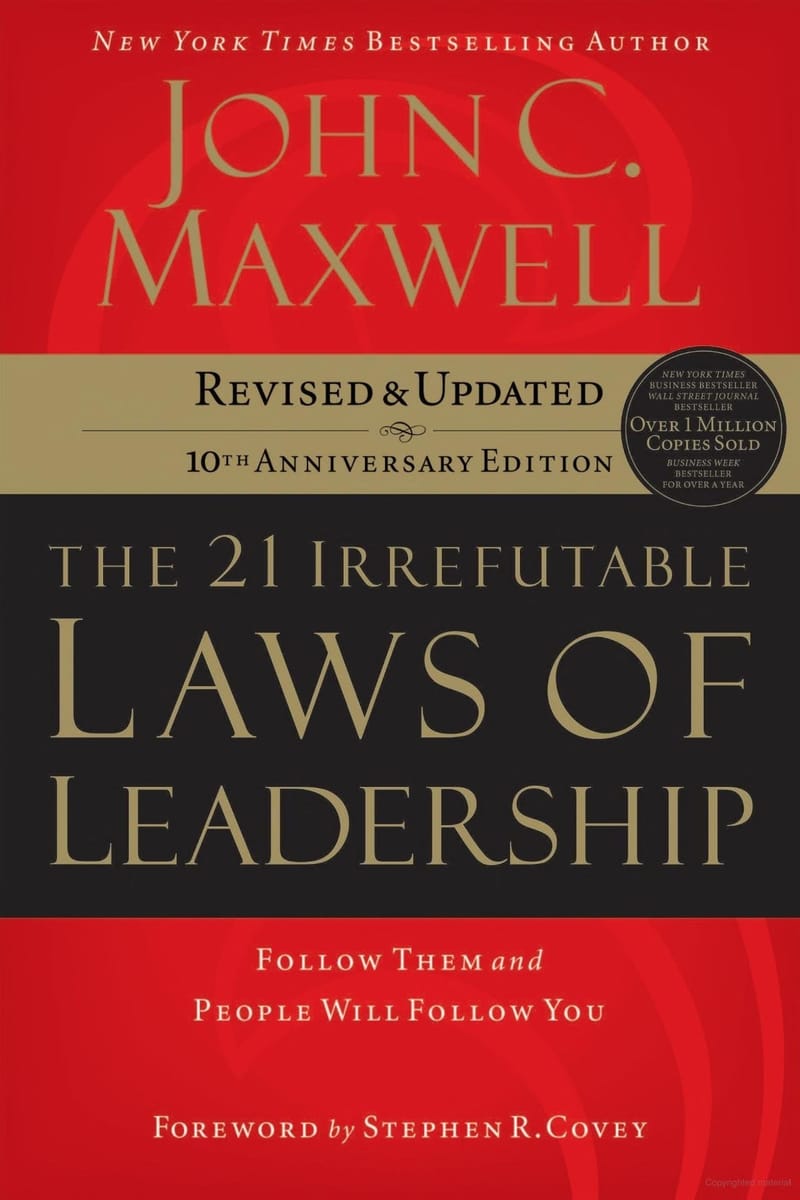
The 21 irrefutable laws of leadership by John Maxwell
War heroes, politicians, and companies popularized the word "leader." Although it is one of the simpler degrees to obtain, the job profile is the most difficult. Over time, I've come to understand that most people view leadership as something eminently superior and above them. We have the propensity to make leadership all about taking on great challenges, altering the course of history, or ushering in a major new wave, to the point where we undervalue the leadership, we exhibit every day. We even fail to appreciate the times when we did lead[1].
Because we don't want to appear arrogant or because we don't have others' confidence, the majority of us end up nodding with a maybe. But in any case, we act without fully comprehending the meaning and characteristics of the word and its qualities.
John Maxwell offers a new perspective on leadership in his book, "21 Irrefutable Laws of Leadership," by instilling the idea that anyone can become a leader as long as they choose to approach it as a marathon rather than a sprint. He conveys the leadership persona through various tried-and-true methods and traits, which he refers to as "Laws." Not everyone possesses or needs all 21 of these traits to be an effective leader. Any one of a person's characteristics is a good place to start, and leadership skills can be improved in the same way as any other skill or career through diligent practice[2].
According to Maxwell's book, following these laws is a wonderful place for someone who wants to become a strong leader to start because they are clear and very helpful. He supports them with tales and real-world business examples. Each chapter is filled with doable exercises and methods that will help you develop your leadership skills. To make his thesis, he uses examples from several industries, such as technology, sports, history and politics, and religion. While doing so, Maxwell continues to draw attention to instances of leaders who failed to live up to expectations, like Henry Ford.
I'm learning how to distinguish between managing and leading with this book, which is also a leadership quality. Managers frequently put more emphasis on the upkeep of the system than on leadership, but it is leaders who bring about change.
REFLECTION:
John Maxwell offers a new perspective on leadership in his book, "21 Irrefutable Laws of Leadership," by instilling the idea that anyone can become a leader as long as they approach it as a marathon rather than a sprint. He conveys the leadership persona through various tried-and-true methods and traits, which he refers to as "Laws." Only some people possess or need all 21 of these traits to be effective leader. Still, each person can start by developing their most vital characteristic and improving their leadership skills through diligent practice.
Maxwell's book provides a beautiful starting point for someone who wants to become a strong leader, as the laws are clear and very helpful. He supports his arguments with compelling stories and real-world business examples, and each chapter is filled with practical exercises and methods to develop leadership skills. Maxwell draws on examples from various industries, including technology, sports, history, politics, and religion, to do his thesis. He also highlights instances where leaders failed to live up to expectations, like Henry Ford, reminding readers of the importance of self-reflection and growth to become a truly effective leader.
While obtaining a degree in leadership may seem simple, the job profile is perhaps the most challenging of all. However, most people seem to view leadership as something eminently superior and beyond their reach. We often consider leadership as taking on great challenges, altering the course of history, or ushering in a major new wave, to the point where we fail to recognize the leadership we exhibit every day. We fail to appreciate the times when we did lead, even in small ways.
It is important to realize that leadership is not just about superb actions, but also about the smaller, day-to-day choices we make and the impact they have on others. In fact, it is often in the small steps that we take as leaders that we have the most significant impact on those around us. So, while it is admirable to aspire to become a leader in the traditional sense, it is important to recognize and appreciate the leadership we exhibit in our daily lives.
As future public servants, it is essential to acknowledge that we profoundly influence those around us. While it is admirable to aspire to become a traditional leader, such as a war hero, politician, or CEO, it is equally vital to recognize and appreciate the leadership we exhibit in our everyday lives. Leadership is not only about taking on great challenges or altering the course of history, but it is also about the small and simple things we do that positively impact those around us. It could be something as small as lending an ear to a friend in need or being a positive influence on a younger sibling or family member.
It is these everyday actions that often have the most significant impact on those around us. Therefore, it is crucial to recognize the value of our actions and the leadership we exhibit in our daily lives, as they have the potential to create a positive change in the world.
As future public servants, we must understand that every action we take can have a significant impact on our communities and that leadership is not just about holding a formal position but it is a quality that can be demonstrated in even the most mundane activities of our daily lives.
REFERENCES:
Kuchhal, G. (2021, December 14). Book Review — ‘The 21 irrefutable laws of leadership’ by John Maxwell. Medium. https://medium.com/arthavc/book-review-21-irrefutable-laws-of-leadership-by-john-maxwell-38ed491f149
